
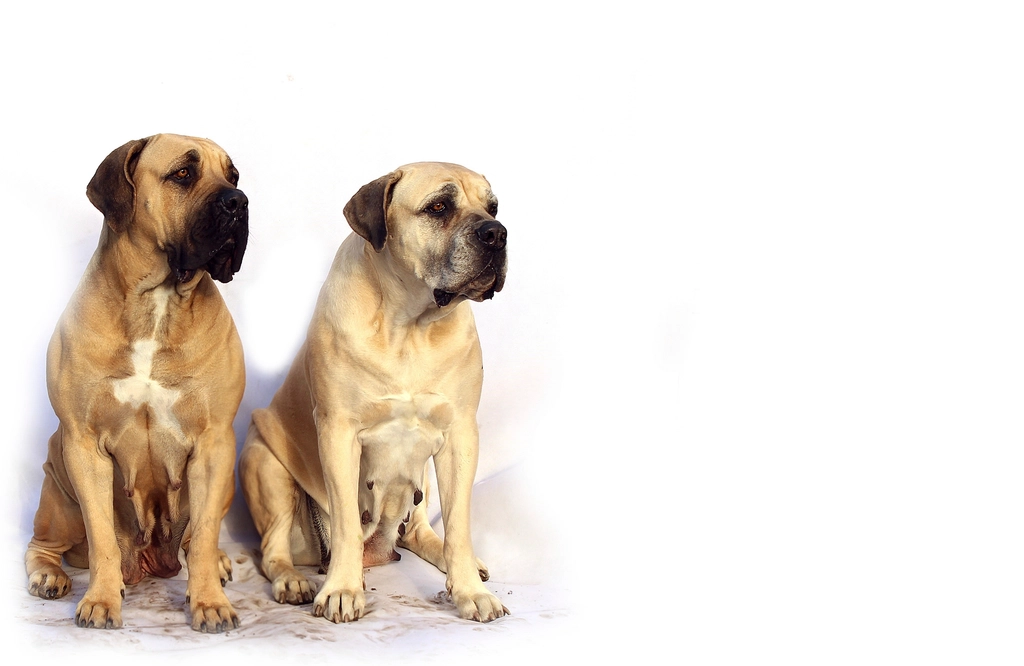
My friend has a dog named Milo who is, most of the time, a very good boy. Milo is a sturdy little pit bull mix with a white chest, soft brown eyes, and the kind of confidence that makes strangers say, “He looks like he has opinions.” He is friendly with people, good in the house, and polite enough on walks that my friend used to brag about him a little.
Then one Saturday morning, they ran into a golden retriever on the sidewalk. It was one of those easy neighborhood moments. A sunny morning. Coffee in one hand. Leash in the other. People out walking dogs before the day got too hot. A few kids riding bikes in a cul-de-sac. Someone mowing a lawn down the street.
The golden retriever was everything a golden retriever is expected to be.
Happy. Soft. Smiling at the world.
The golden’s owner stopped to say hello, and the dogs did a calm little sniff. Everything seemed fine. Milo stood beside my friend, relaxed enough, watching but not pulling.
Then my friend made a mistake. He crouched down and petted the golden retriever.
Just twice. That was all.
Two friendly strokes on the golden’s shoulder. Before my friend could even pull his hand back, Milo stepped in.
Not walked. Inserted himself.
He pushed his body between my friend and the golden, swung his rear end sideways like a furry little traffic barricade, and blocked the golden retriever completely. Then he let out one low, offended sound.
Not a bark. Not a full growl.
Just a small, deep “mmph” from the back of his throat.
My friend froze.
The golden retriever blinked, still cheerful and completely unbothered.
The golden’s owner laughed politely.
My friend, both embarrassed and trying not to laugh, stood up and guided Milo away. “Milo,” he said, “what was that?” Milo looked up at him as if the answer should have been obvious.
That hand is mine.
Dog people like to joke about jealousy. We say things like, “Oh, he’s jealous,” when the dog wedges himself between two people on the couch. We laugh when one dog demands attention because another dog is being petted. We post videos of dogs nudging phones away, shoving their heads under hands, or climbing into laps that are already occupied.
And yes, sometimes it is funny. There is something painfully human about a dog who cannot stand to watch his person love anyone else for five seconds. You pet another dog, and your dog appears with the urgency of a lawyer objecting in court.
Excuse me.
That hand has an existing contract. But as funny as it can look, there is more going on. And we should be careful how we respond.
When a dog gets upset because you pet another dog, it does not mean he has suddenly become bad. It does not mean he is mean, broken, or ungrateful. Often, he is feeling uncertain.
Dogs notice patterns. Your hands feed him. Your hands clip the leash. Your hands open the door.
Your hands rub his ears, scratch his chest, hold his chew, buckle his harness, and rest on his head when the world feels loud. To him, your hands are not neutral. They are part of his safety.
Part of his comfort. Part of his daily life.
So when those hands reach for another dog, especially in a close, exciting, socially loaded moment, some dogs feel pressure they do not know how to handle. A confident dog may not care. A social dog may join in happily.
A nervous dog may step back. A possessive or insecure dog may push forward. A dog who has had to compete for resources before may react faster than expected.
A rescue dog may not know yet that attention is not a limited supply. And some dogs, even deeply loved ones, simply want reassurance.
Are you still my person?
Does that dog get your hand now? Do I need to do something? From the outside, it may look bossy.
From the dog’s side, it may feel urgent. That does not mean we should excuse every behavior. A dog shoving between you and another dog is one thing.
A dog stiffening, growling, snapping, or escalating is another. Low growling should not be treated as cute. A growl is communication. It is the dog saying, “I am uncomfortable.” That matters. We should listen to it, not punish it harshly or laugh it off. But we also should not encourage the dog to believe that growling is an acceptable way to control every interaction.
The goal is not to scold the dog for having feelings. The goal is to teach him that he does not need to panic when attention is shared. That is what my friend eventually learned with Milo.
At first, he made the mistake many people make. When Milo shoved in, my friend would laugh, pet him, and say, “Are you jealous?” To Milo, that probably felt like success.
He blocked the other dog. He got the hand back. The system worked. So Milo repeated it.
The next time my friend greeted a neighbor’s doodle, Milo pushed in faster. At the dog park gate, when my friend bent down to pet a familiar Lab, Milo squeezed between them and planted himself there. At a friend’s backyard barbecue, when another dog came over for attention, Milo climbed halfway into my friend’s lap and stared at the other dog like a tiny nightclub bouncer.
It was still funny—until it was not. Because Milo’s body language started changing.
A little stiffer. A little more intense. A little less playful.
That was when my friend realized he had to help Milo before the habit became a problem.
So he changed the pattern.
When they saw another dog, he did not immediately reach for the other dog. First, he checked in with Milo.
A calm voice. A soft touch. “Good boy, Milo.”
Then, if Milo’s body stayed loose, my friend would briefly pet the other dog. Only for a second or two.
Then back to Milo. Praise. Treat. Relax.
If Milo stayed calm while the other dog received attention, he was rewarded immediately.
Not five minutes later. Not after a lecture. Right away.
Good things still happen when another dog is near me.
My person still sees me.
I do not need to shove. I do not need to guard the hand. At first, Milo needed a lot of help.
Distance helped. Short greetings helped. No crowded sidewalk greetings helped.
No letting strange dogs rush up helped. My friend also learned to read Milo earlier.
The ears. The mouth. The shoulders.
The moment Milo’s body started to lean forward with too much purpose. The moment his eyes got fixed. The moment the tail stopped being loose and started being stiff.
That was the moment to redirect, not after the growl. Good dog handling often happens before the dramatic part. People tend to notice the growl, the bark, the lunge, the shove. But dogs usually speak before that. A pause. A stare. A closed mouth. A shift in weight. A tail that changes. A dog who was relaxed one second and suddenly is not.
When you learn your dog’s early signals, you can help him while he is still reachable. That is kinder than waiting until he has to shout.
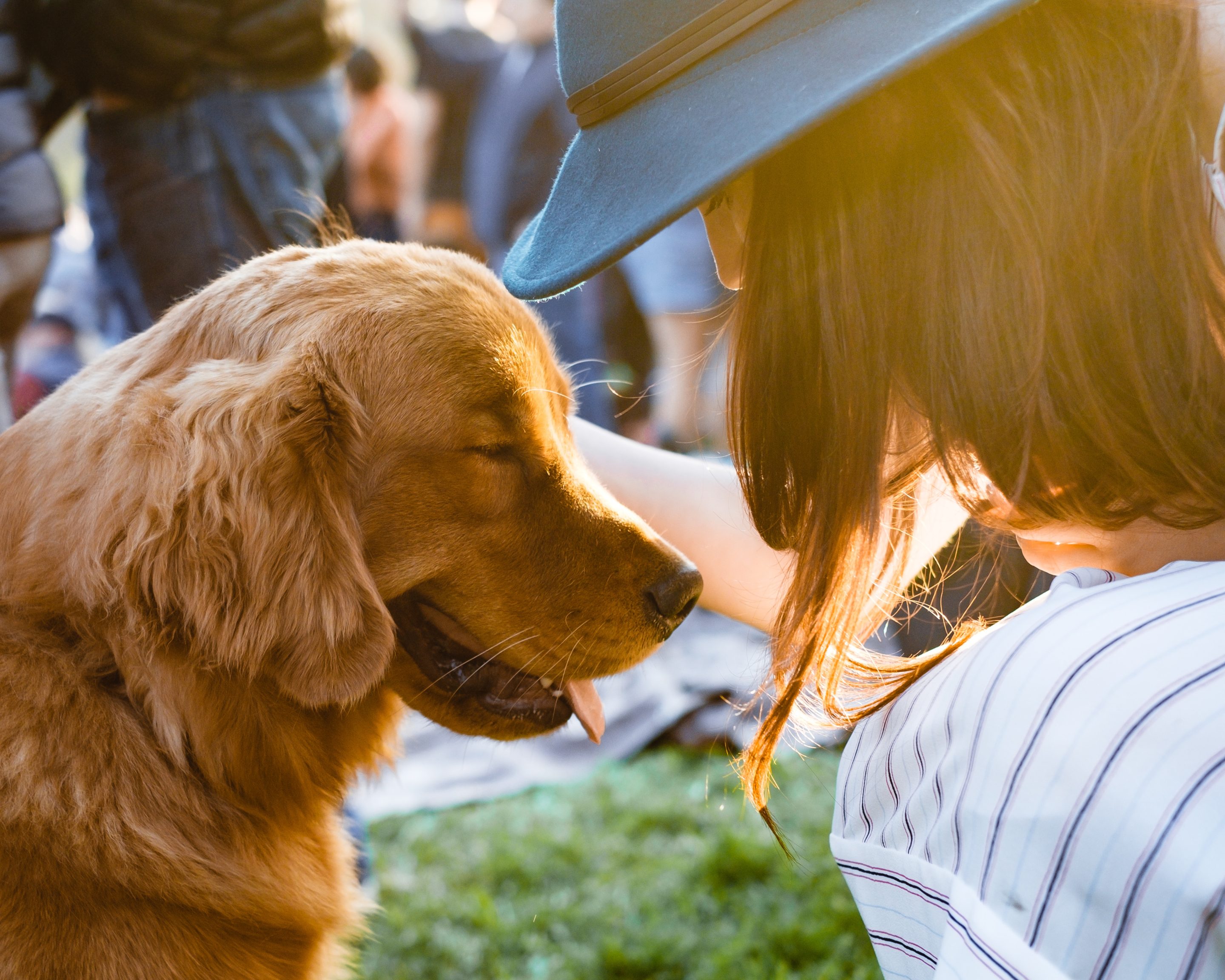
Over time, Milo improved.
He did not become a dog who adored sharing attention. Some dogs never do. He still preferred to be first. He still believed my friend’s hands were among the most important resources in the known universe.
But he stopped body-blocking every dog who came near.
He learned to wait.
He learned that praise came when he stayed calm. He learned that another dog getting two seconds of affection did not mean he had been replaced. That may sound silly to humans.
Of course a person can pet two dogs. Of course love is not a pie. Of course rubbing a golden retriever’s ears at the corner does not mean you are abandoning your own dog and starting a new life with the golden.
But dogs do not reason about belonging the way we do.
They feel the moment.
And in the moment, your attention is powerful. That is why small reassurances can matter. Your dog may not need much.
A word. A touch. A treat for calm behavior.
A little distance from the other dog.
A predictable pattern. First you. Then the other dog. Then you again.
For many dogs, that is enough.
Not because they are spoiled.
Because they are trying to understand where they stand. A dog who trusts his place in your life can often share space more easily. A dog who feels uncertain may fight harder for it.
The more secure they feel, the less they need to prove.
This is especially true in multi-dog homes. Anyone who has two dogs knows the politics of attention. You pet one dog, and the other dog appears from another room.
You give one dog a treat, and suddenly everyone is extremely present. You sit on the couch, and both dogs begin a silent negotiation over who gets the closest body contact. One dog puts a head on your knee.
The other dog puts a paw on your arm.
The first dog scoots closer.
The second dog sighs like a person betrayed by history. It can be sweet, but it still needs structure. Dogs should learn that attention is shared calmly.
Not stolen. Not guarded. Not fought over.
The same principle applies outside the home. If your dog gets jealous or pushy when you greet another dog, slow the situation down. Do not let the other dog crowd him.
Do not trap him on a tight leash nose-to-nose. Do not scold him after he is already upset and then continue petting the other dog as if proving a point. That only makes the situation more emotionally loaded.
Instead, create small successful moments. Give your dog space. Reward calm watching. Keep greetings brief.
Pet your own dog first if that helps him settle. Touch the other dog for a second, then return to your dog. Use treats if your dog can eat calmly in that context.
End the interaction before your dog has to escalate. And if your dog is showing serious guarding, snapping, lunging, or intense reactivity, get help from a qualified trainer or behavior professional. There is no shame in that. Some dogs need more support, especially if the behavior is rooted in fear, resource guarding, or past experiences.
The important thing is not to pretend the growl is cute. It is also not to shame the dog for having a hard feeling.
Dogs are allowed to feel.
They are not allowed to make every feeling everyone else’s emergency. That is where good training lives.
Between understanding and boundaries. Between affection and safety.
Between “I know this is hard for you” and “I will help you handle it differently.”
Milo still has moments.
If a very friendly dog rushes up and tries to climb into my friend’s lap, Milo has opinions. Strong ones. You can see it in his face.
But now my friend knows what to do. He keeps the leash loose but managed.
He gives Milo a job. “Here, buddy.” A treat. A calm word. A hand on Milo first.
Then, if the situation is appropriate, a brief hello to the other dog.
Then back to Milo. No drama. No teasing him.
No “Are you jealous?” while accidentally rewarding the pushy behavior.
Just reassurance and structure.
The funny thing is, once Milo stopped feeling like he had to compete, he became less competitive. That is often how dogs work. The more secure they feel, the less they need to prove.
The more predictable we are, the less they need to control. The more we notice them before they panic, the less they have to make noise. Underneath all the comedy of a jealous dog is something tender.
Your dog has built a world around you.
Your voice. Your smell. Your hands. Your attention.
Your return at the end of the day. To you, petting another dog may be a harmless moment on the sidewalk. To your dog, it may feel like a question.
Do I still matter? Am I still yours?
Will that hand come back to me? And when you think of it that way, the behavior becomes less ridiculous.
Still not something to encourage. But easier to understand.
Your dog is not trying to ruin your social life with every golden retriever in the neighborhood. He is trying, clumsily, to confirm his place. Milo never needed my friend to stop loving other dogs.
He just needed to learn that love was not being transferred. A hand could pet the golden retriever and still come back. A kind word could be given to another dog and still belong to him too.
Another dog could exist without ending the world. That is a small lesson, but for some dogs, it is a big one. So the next time your dog wedges himself between you and another dog, pause before you laugh too hard.
Notice the body language. Keep everyone safe.
Do not reward the growling or blocking. But also hear the feeling underneath it. He may not be trying to be difficult.
He may be asking a very simple question in a very dog-like way: That hand is still mine too, right? And if we answer with patience, consistency, and a little training, many dogs can learn the truth.
Yes. You are still mine. And I am still yours.
When the time comes to move a companion — across borders or across the country — Transcon Pet Movers handles the crates, paperwork, and customs so dogs, cats, birds, reptiles, and exotic pets travel safely. Learn more at transconpet.com or call (650) 656-0082.