
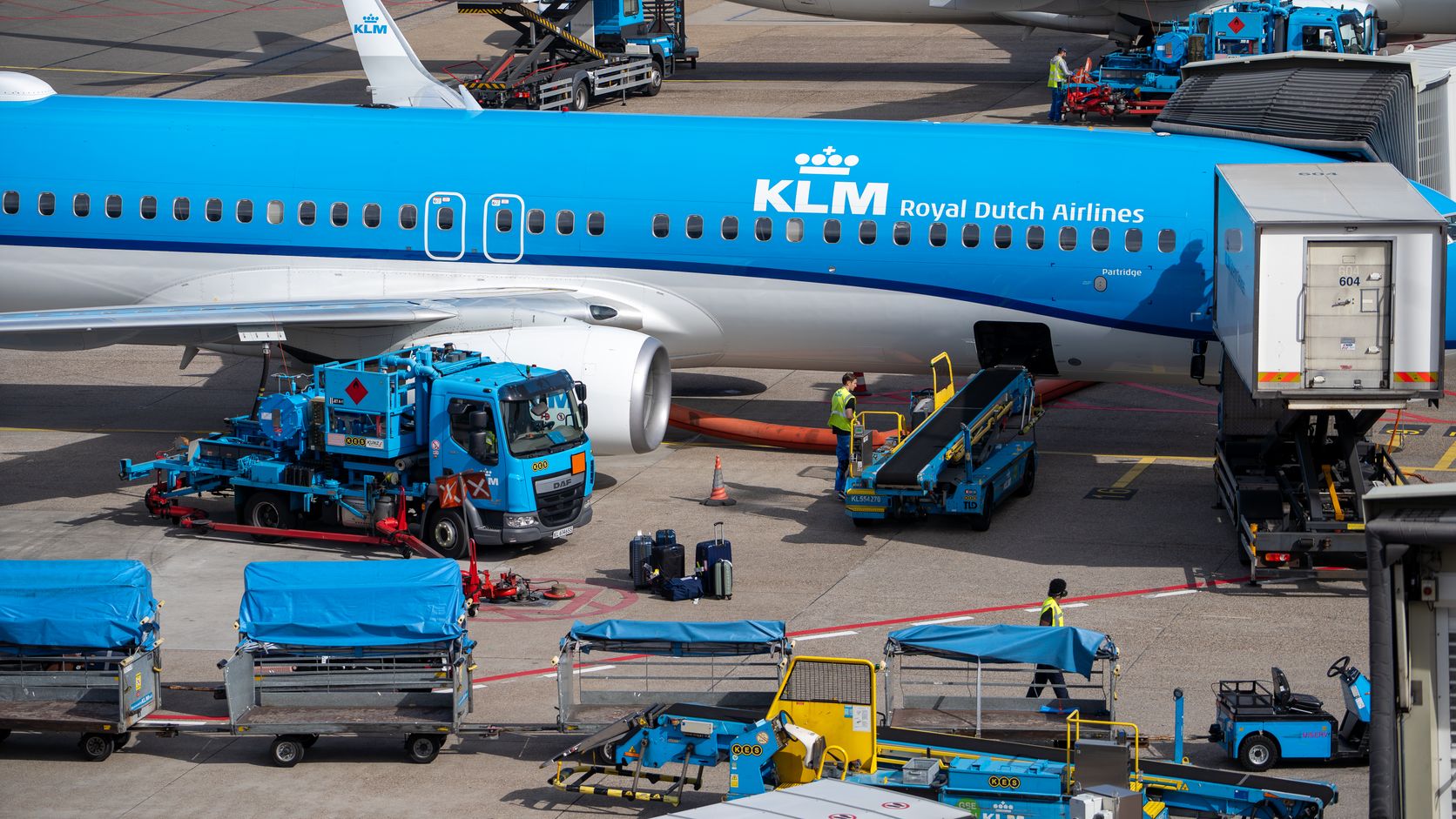
Start with your own itinerary and with who will accompany your pet. Whether you fly with your pet, arrive within five days before or after it with someone you have authorized, or cannot do either decides which certificate your veterinarian prepares, where your pet is checked at Schiphol, and who has to be there.
This guide covers dogs and cats moving from the United States to the Netherlands, and a pet whose route only passes through Amsterdam on the way to another country.
Choose the traveler route or the commercial route
A move is non-commercial when the pet travels because you do, with no sale or change of ownership. The Dutch food safety authority, the NVWA, adds that you make the same journey within five days before or after your pet, and that you bring no more than five animals.
If you cannot travel with your pet, you can authorize someone else in writing to accompany it. You fill in the owner’s declaration. The authorized person fills in a separate declaration and carries proof of your own trip, such as a copy of your boarding pass.
A dog or cat that does not meet those conditions is a commercial movement. It has to arrive through an inspection centre at a border control post, and the NVWA says Schiphol is the only one in the Netherlands where these animals can arrive. A pet shipper arranges the advance notification and the appointment, and your pet needs the commercial certificate.
Our timing article reports that on routes through Amsterdam and Frankfurt, operators have been preparing a commercial certificate whenever the owner is not on the pet’s flight. That is practice, not law. If the pet travels before you, EU guidance permits it within the stated conditions, but USDA’s owner/designated-person summary does not clearly describe that sequence. Settle the certificate type with your accredited veterinarian and shipper before booking.
The veterinary file and the certificate clock
The EU rules apply: a microchip before the rabies vaccination, a pet at least 12 weeks old at vaccination, and a certificate issued by a USDA-accredited veterinarian and endorsed by USDA.
After a primary rabies vaccination your pet must wait at least 21 days, or the manufacturer’s longer period. A timely booster does not restart that wait. USDA treats a US primary vaccination as valid for one year even when the vaccine is labeled for three, so check dates with your veterinarian. USDA’s page lists no rabies antibody test for a pet from the United States. The NVWA says dogs and cats under 15 weeks old cannot enter.
Time the paperwork to the arrival check. The model certificate’s own note makes it valid for 10 days from issue, or from endorsement where an authorized veterinarian issues it, until the document and identity check on arrival. USDA’s page words this differently, as 30 days from issue. Build your calendar on the 10 days.
A form signed at the clinic is not yet endorsed. USDA ink-signs and embosses the paper original, which then travels with your pet. USDA processes endorsements Monday through Friday only. For a commercial certificate it also expects an inspection within 48 hours before loading for dispatch and endorsement within 48 hours of issue. Mark the weekends on your calendar before you fix a departure day.
What happens at Schiphol
For a non-commercial pet, the NVWA says you do not notify it beforehand. Its entry-point sheet lists Amsterdam Schiphol and tells passengers with live animals to use the red “something to declare” exit. Customs checks the microchip and the documents. The NVWA says a pet that meets the EU requirements is not quarantined. Otherwise customs hands it to an NVWA veterinarian, who may quarantine it or send it back, with all costs on you.
A commercial pet goes to a Schiphol inspection centre instead, on the appointment your shipper made.
For a pet flying as cargo, ask your shipper and the airline where and when you meet the animal. Our Amsterdam page describes customs clearance and a local pet taxi. Clearance in the Netherlands is done by a local import agent whom we introduce. The agent quotes it separately from our flight-and-service price, so ask for that quote at the start.
If your pet only changes planes in Amsterdam
According to the NVWA, a dog or cat continuing to another non-EU country can skip the EU entry requirements only while it stays inside the airport’s international transit zone, in contact with no other animals. It must not leave the zone, even when a flight is delayed, and the NVWA warns that the zone has no facilities to house animals. A pet waiting in an airport cargo shed must meet the entry requirements and may be inspected. If you carry on by boat or car, the exemption does not apply.
USDA adds that only a pet traveling non-commercially may qualify, and an unaccompanied pet needs the commercial certificate. Our timing article reports airlines asking for transit paperwork anyway, so confirm what your airline requires.
Two checks before you book
Confirm every leg. An airline’s booking portal can accept a routing that the airline will not carry a pet on for every leg, particularly when the route connects two hubs. Ask the airline to confirm in writing that it will accept your pet on each leg, and which days its live-animal acceptance runs.
Make the names match. The pet’s name, microchip number and owner details should read the same on the certificate, the EU pet passport if you have one, the airline paperwork and the crate label. A spelling difference can mean reissued documents, so check them against each other before the appointment.
What to budget
Budget $2,500–$3,500 for pet shipping services and freight from California to the Netherlands.
These items sit outside that range and are quoted separately:
- the travel crate
- the veterinary exam and certificate
- USDA endorsement, at USDA’s current rates
- clearance at Schiphol by the local import agent
- ground transport and boarding in the US, and delivery from the airport
A larger crate, a second pet, or a departure outside California changes the freight line. Ask for a written quote that says what is included at each end.
What to send with your quote request
Send your US starting city, whether you will travel with your pet or arrive within five days before or after it, and your Dutch airport and final address. Add species, breed, age, weight, standing measurements and your crate. If you are arriving from another country, say so, because your own route affects the paperwork.
Related reading: Why pets can’t always fly on your flight, Choosing the right crate size
Planning a move with your pet? Get a quote from Transcon Pet Movers.